
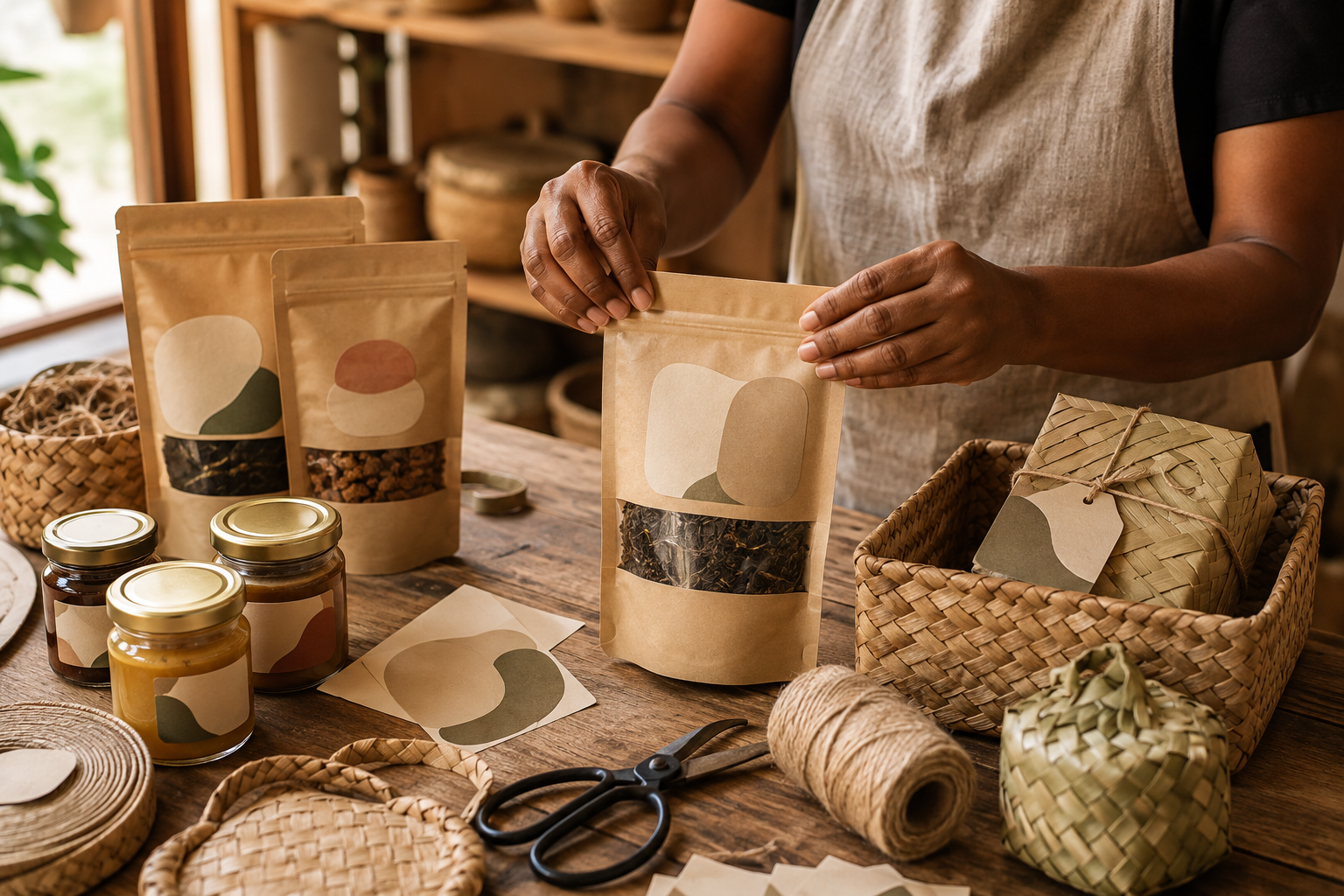
Packaging is often the customer’s first physical experience of a product. It protects the contents, communicates essential information and signals whether the producer pays attention to quality. Improvement does not always require an expensive box or imported material. Small producers can often achieve a more professional result by making a few consistent, practical changes.
1. Choose the correct size
Oversized packaging increases cost, wastes space and can make a product appear smaller than expected. Packaging that is too tight may damage the item or seal poorly. Test several sizes with the actual product and allow only the space needed for protection. Standardising a small number of pack sizes can also simplify purchasing and stock control.
2. Make the product name easy to read
A customer should understand what the product is within a few seconds. Use a clear product name with strong contrast between the letters and background. Avoid filling the front label with long paragraphs or many decorative fonts. The business name, product name and main distinguishing feature should have a visible order of importance.
3. Organise required information
Labels should include the information required for the relevant product category and market. This may include net weight, ingredients, manufacturer details, batch identification, manufacturing or expiry information, storage instructions and contact details. Requirements can change, so producers should confirm them with the appropriate Sri Lankan authority rather than copying another brand’s label.
4. Improve consistency before adding decoration
Customers notice when labels are placed at different angles, seals vary between packs or colours change from one batch to another. Create a simple packing checklist covering fill level, seal, label position, cleanliness and final inspection. Consistency builds trust more effectively than an elaborate design applied unevenly.
5. Protect the product during delivery
A package that looks attractive on a shelf may fail during transport. Test it by placing products in the actual delivery bag or carton and carrying them over a normal route. Check for leakage, crushing, moisture and movement. Use food-safe or product-appropriate inner protection where necessary, and avoid making environmental claims unless the materials genuinely support them.
6. Use photographs and printing carefully
A clear product photograph can help online customers, but the package itself should represent the contents honestly. Printed colours may look different from a phone screen, so request a physical proof before ordering a large quantity. Check spelling, telephone numbers, weights and dates carefully. A small printing error repeated across thousands of labels becomes an expensive problem.
7. Ask customers what is confusing
Show a proposed package to people who have not seen the product before. Ask what they think it contains, who it is for, how it should be used and what information is missing. Their first impressions may reveal problems that the producer no longer notices. Record the feedback, make one controlled change and compare customer response before redesigning everything at once.